Chux Pads
Disposable underpads that stop a leak at the sheet
A chux pad goes under the hips and takes the liquid before it reaches the mattress. The soft top layer passes urine through, an absorbent core holds it, and a leakproof backing keeps it off the bed. Sizes run from a 17 x 24 inch chair pad to a 36 x 36 inch overnight pad, in light through maximum absorbency, with breathable and repositioning-rated versions for specialized care.
- 4.6/5 average customer rating
- Sizes from 17 x 24 to 36 x 36 inches
Disposable Chux Pads by Size and Absorbency
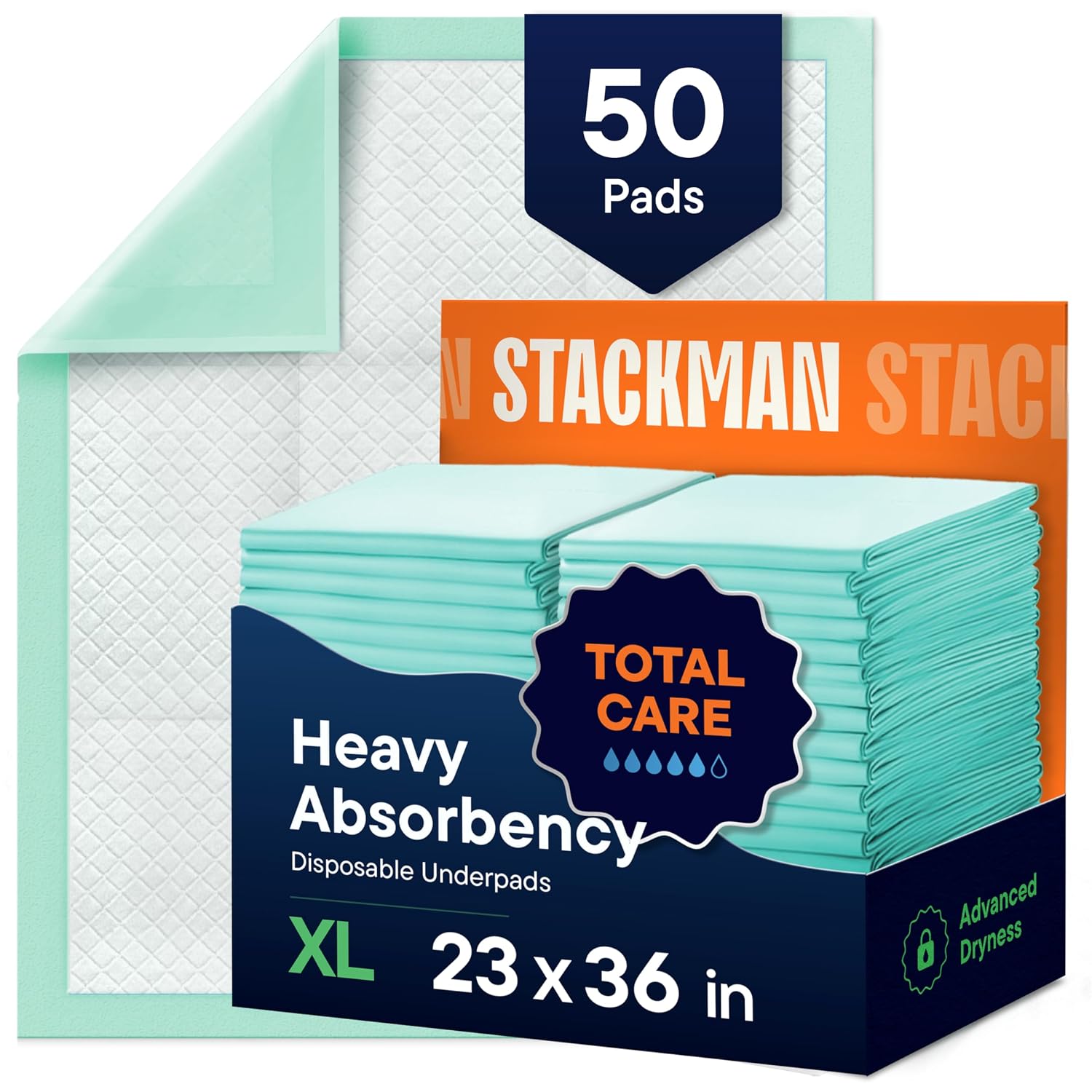
23 x 36 in, heavy absorbency, 50 pads
The general-purpose size, and the one most people should try first. Laid across the middle of a bed it covers the hips and lower back of an adult who does not travel far in their sleep. It also fits a recliner seat without hanging over the arms. Twenty-three inches of width is the limit for a restless sleeper, so move up a size if leaks keep appearing past the edge.
See this size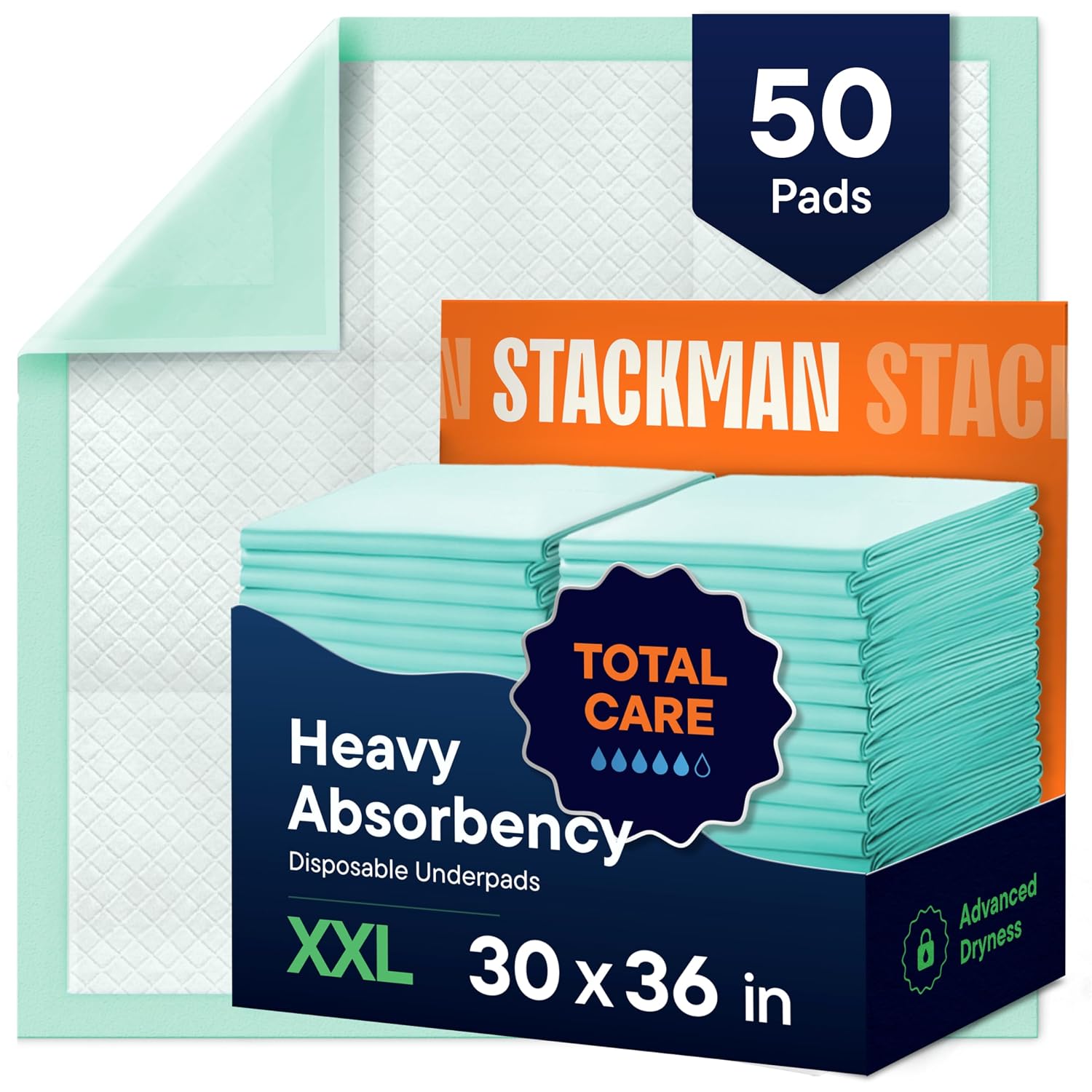
30 x 36 in, heavy absorbency, 50 pads
Seven extra inches of width over the 23 x 36, which is exactly where most overnight leaks escape. This is the size to buy for an adult who rolls, for a night with long gaps between checks, or for anyone whose mattress would be expensive to replace. The length stays manageable on a twin or a full, so the pad is not fighting the fitted sheet at the foot of the bed.
See this size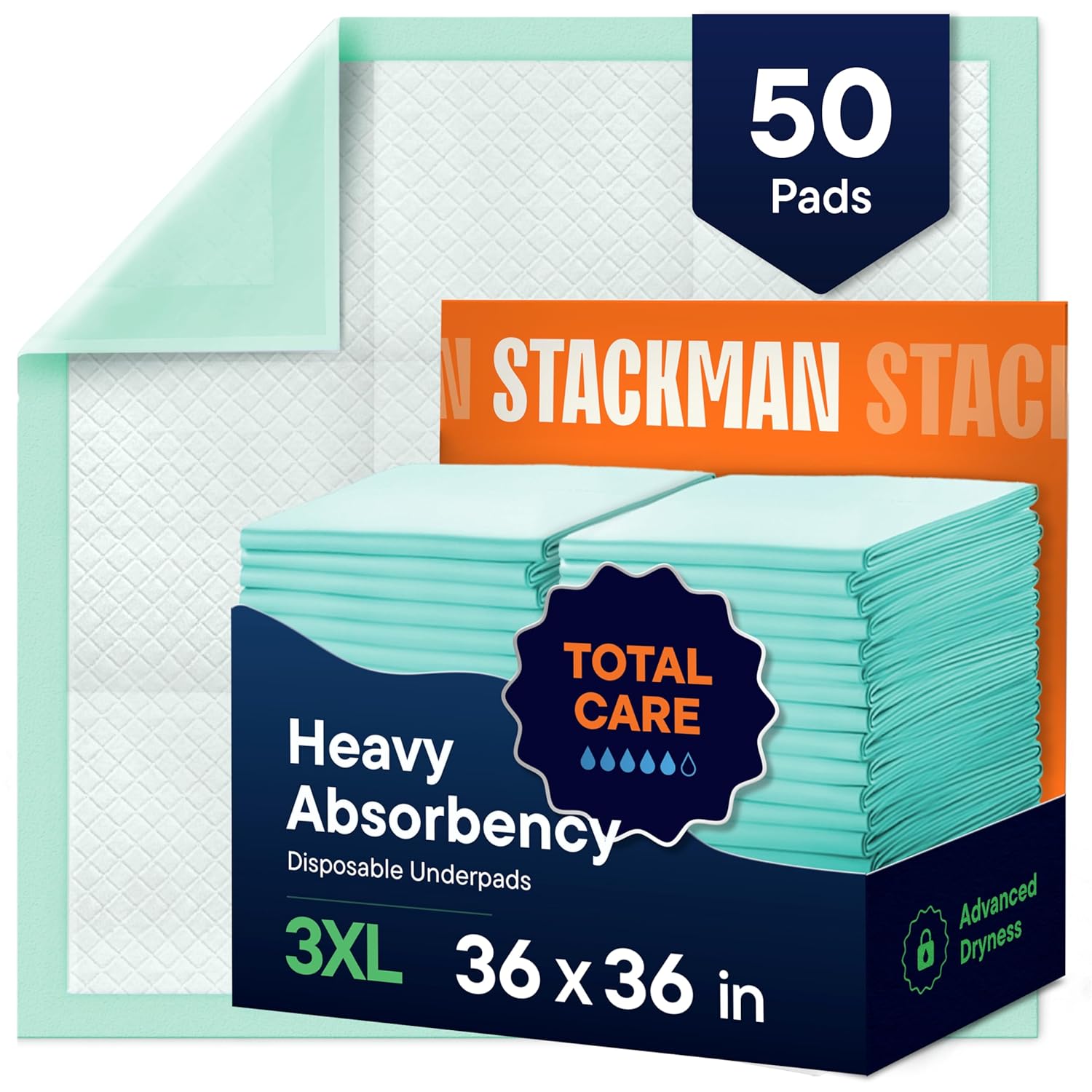
36 x 36 in, heavy absorbency, 50 pads
A square three feet of coverage, which stops mattering as a number and starts mattering the first time a leak lands somewhere unexpected. Buy this when the wet spot never shows up twice in the same place, when a sleeper shifts a foot or more overnight, or when a pad has to sit under both hips and a piece of medical equipment.
See this size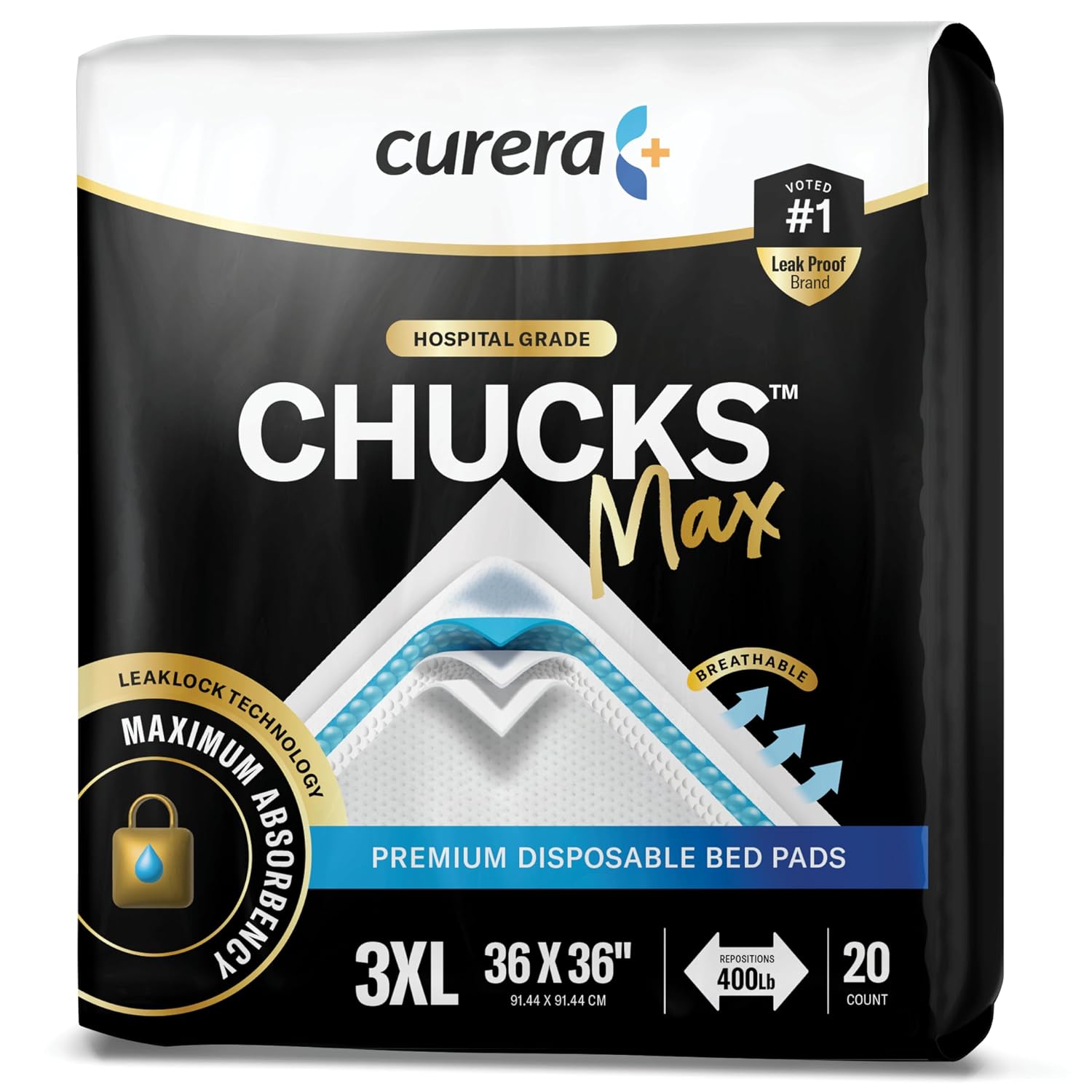
36 x 36 in, breathable, 400 lb rated, 20 pads
Two features here that ordinary pads do not have. The backing passes air, so the pad can go on a low-air-loss mattress without shutting off the airflow the mattress exists to provide. The construction is reinforced and carries a stated 400 lb capacity for repositioning, which means it will take the pull of turning or boosting someone. No pad without a printed weight rating should ever be used that way.
See this size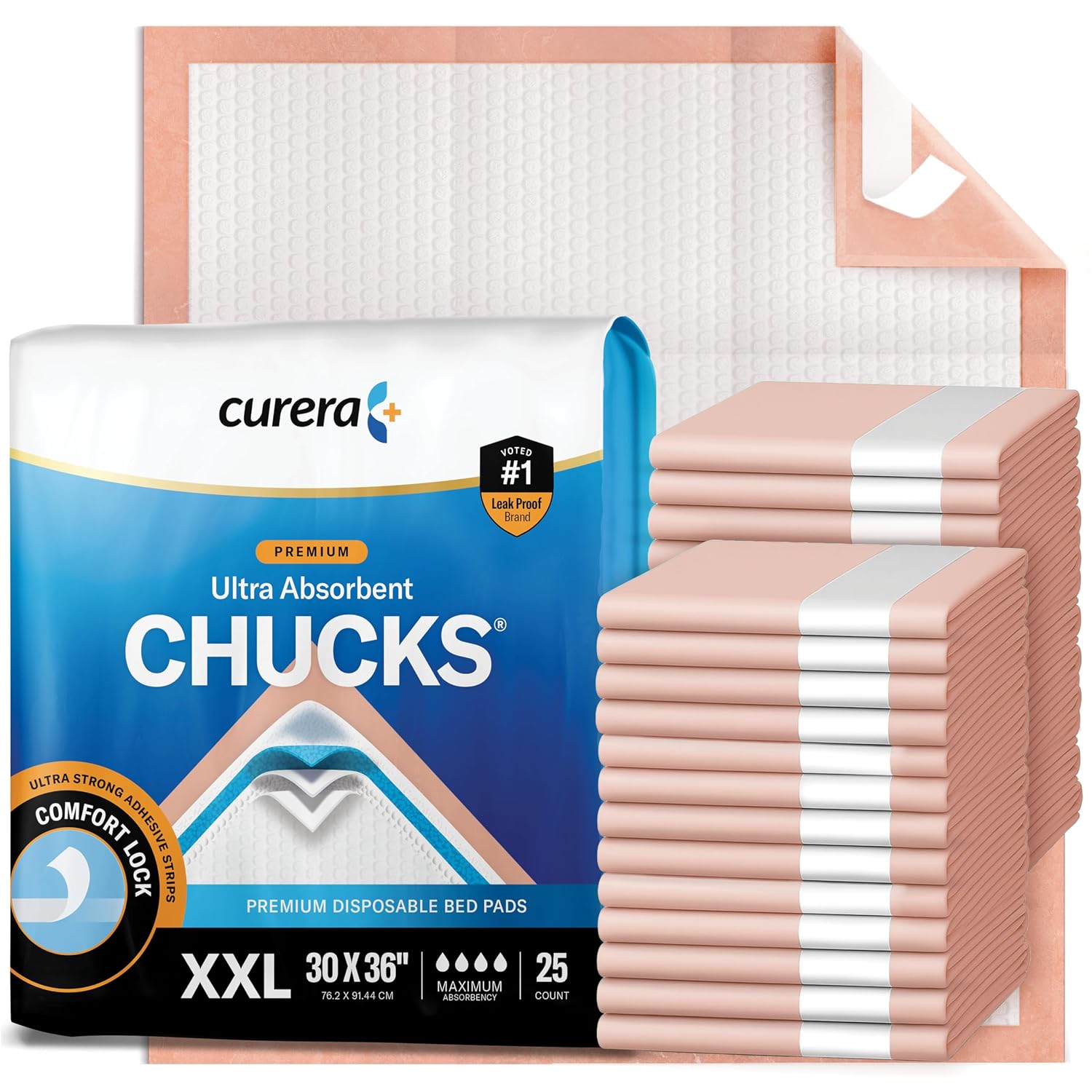
30 x 36 in, maximum absorbency, adhesive strips, 25 pads
Adhesive strips on the back hold the pad to the sheet. That solves the failure nobody plans for: the pad stays dry all night and the bed still gets wet, because a moving sleeper dragged it out from under themselves by 2am. Parents night-training a child rate this feature above absorbency. The peach backing also reads as less clinical than blue, which matters more in a bedroom than it sounds.
See this size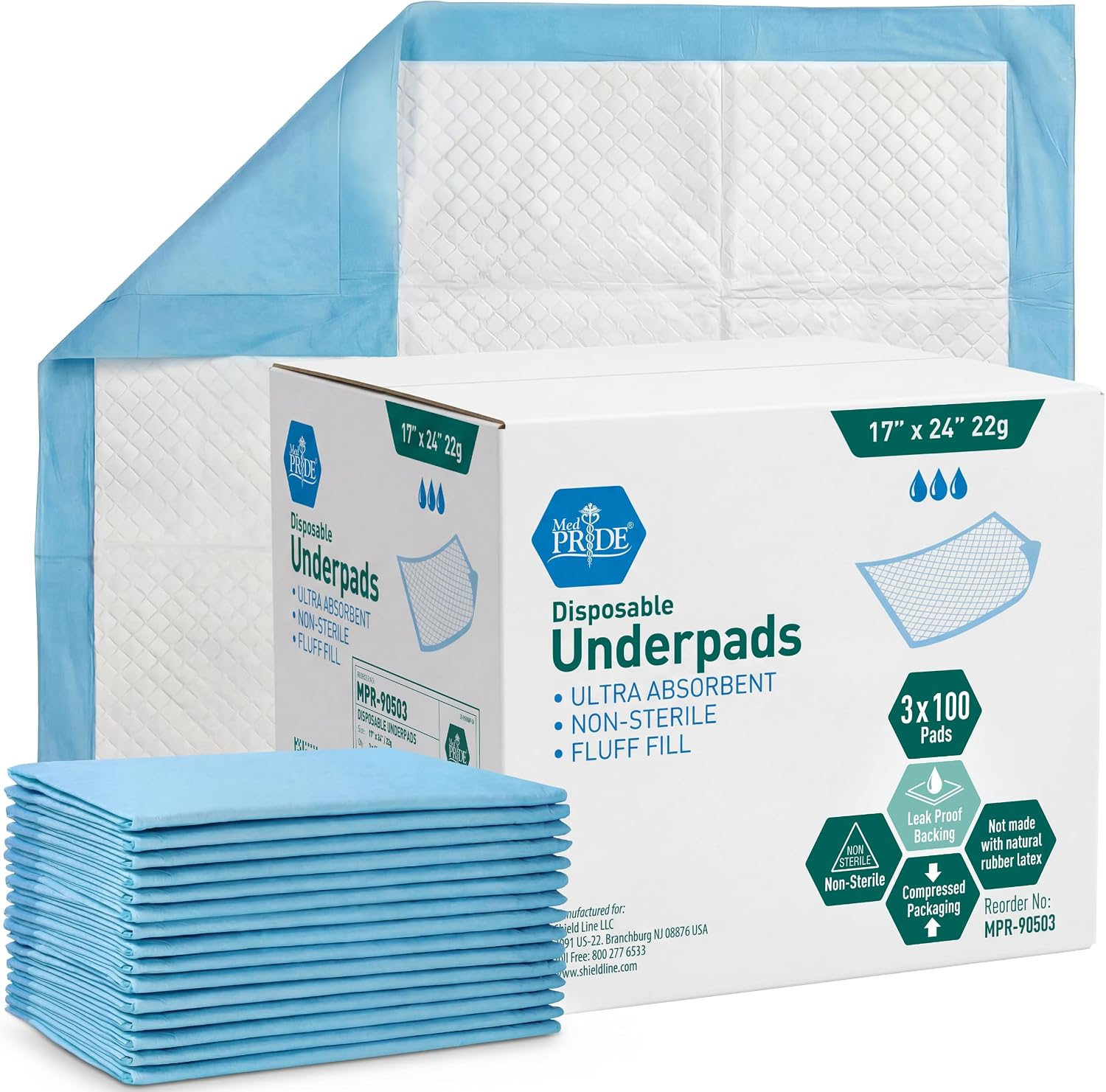
17 x 24 in, light fluff core, 300 pads
A small pad with a 22 gram fluff core, sold three hundred to a case. Nothing about it suits an overnight bed. Everything about it suits the twenty smaller jobs: a chair seat, a changing surface, under a catheter or ostomy change, under a dish a cat keeps tipping over. Using a 36 inch overnight pad for those costs several times more and throws most of the pad away unused.
See this sizeOther sizes and case counts
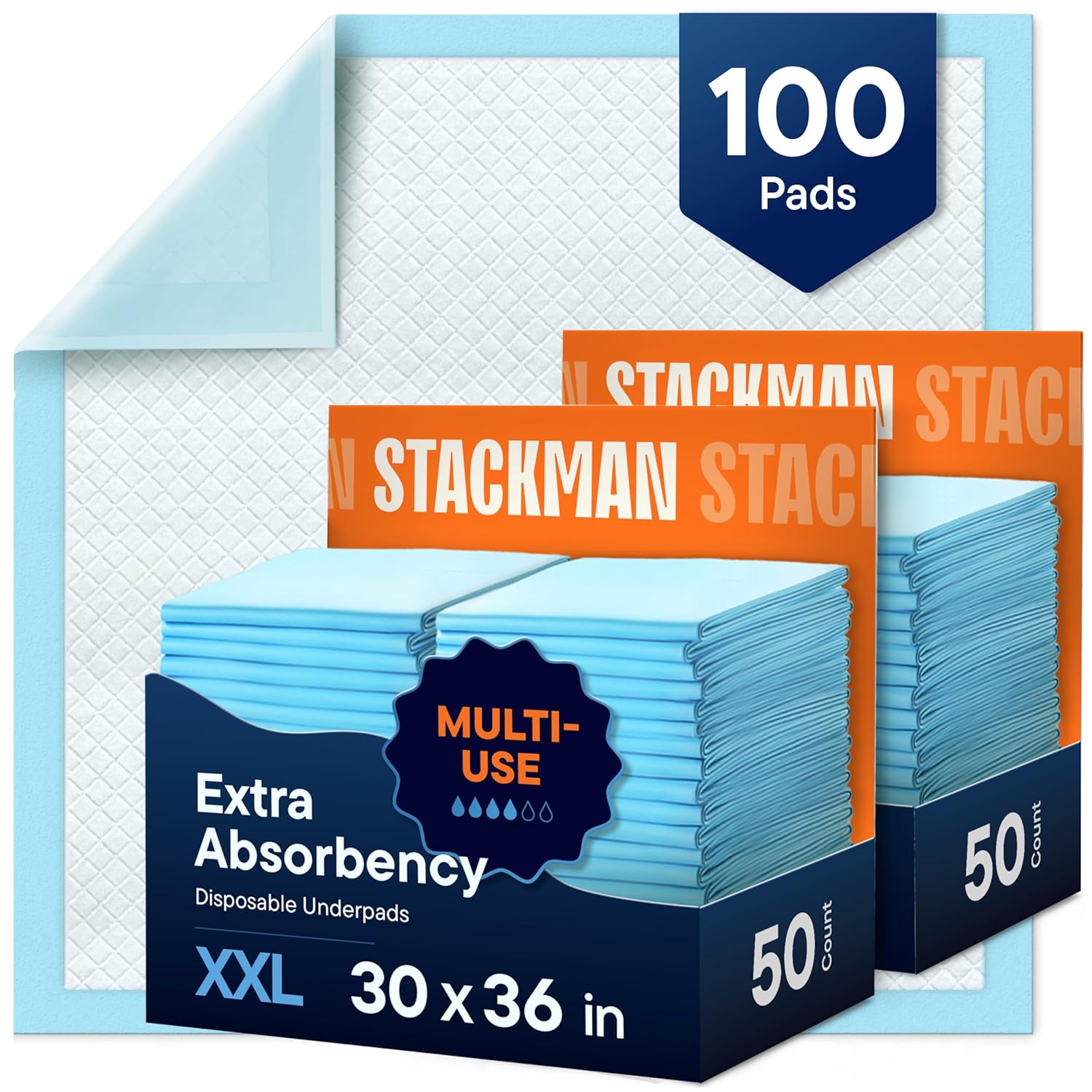
30 x 36 in, extra, 100 pads
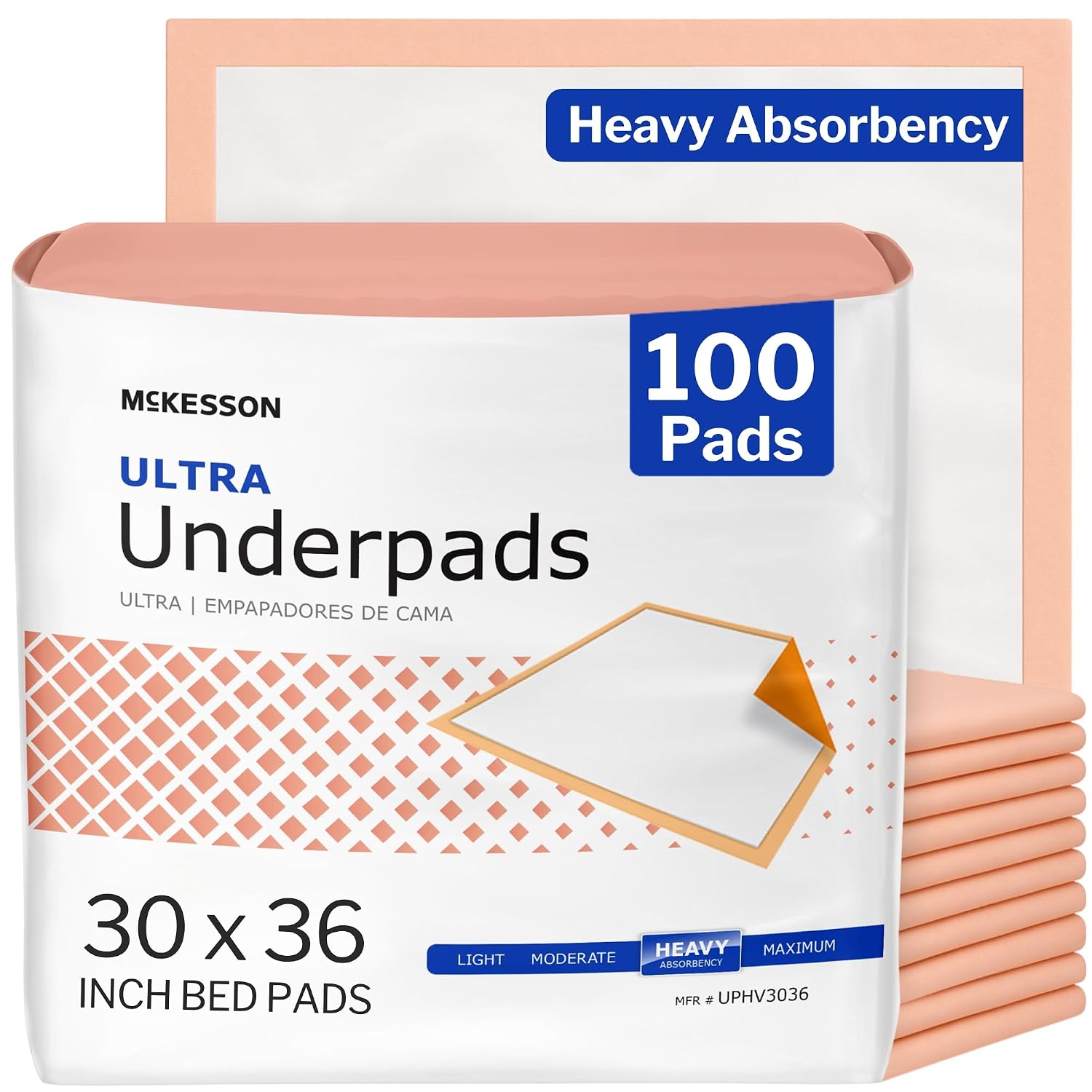
30 x 36 in, heavy, 100 pads
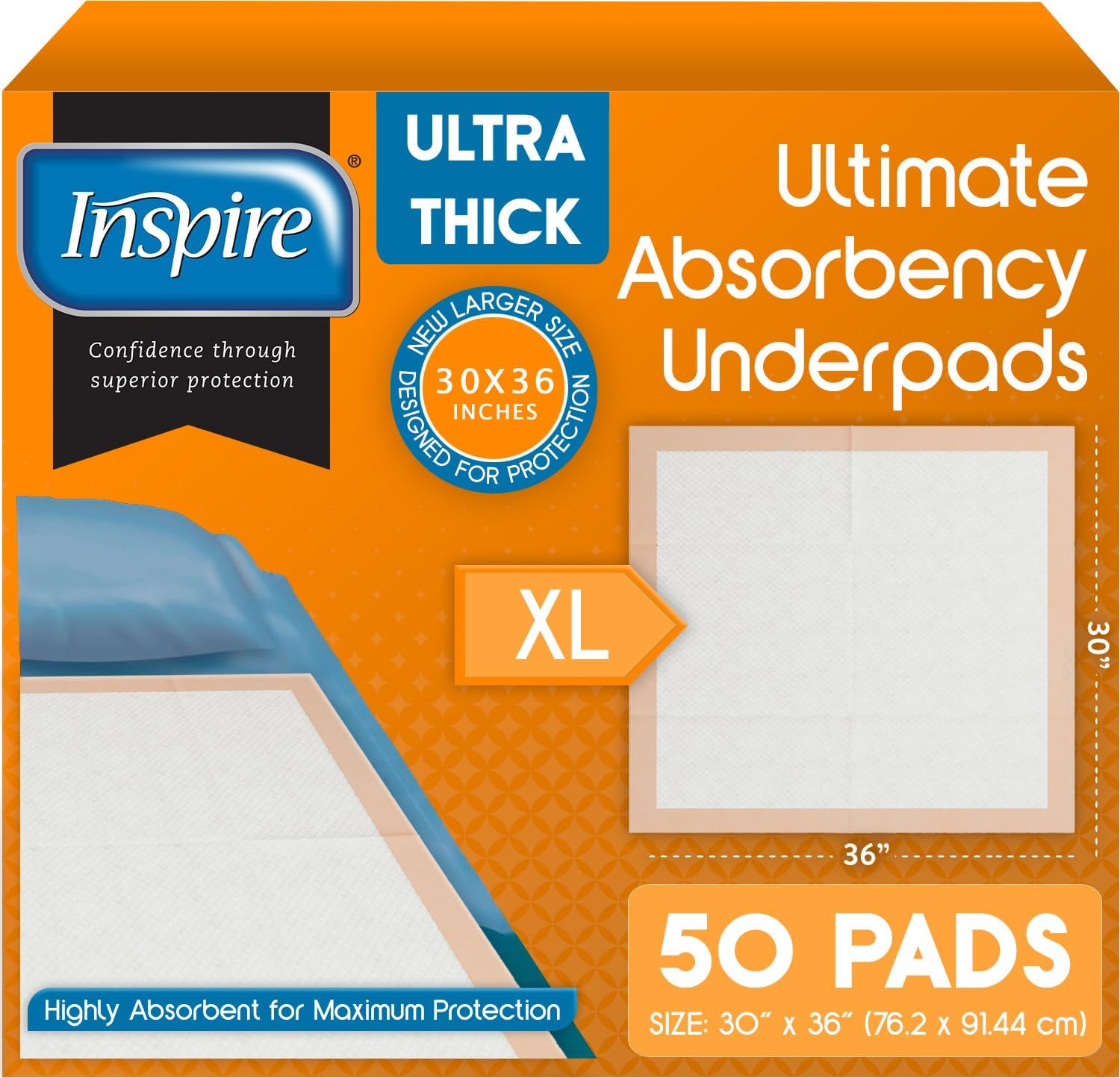
30 x 36 in, maximum, 50 pads
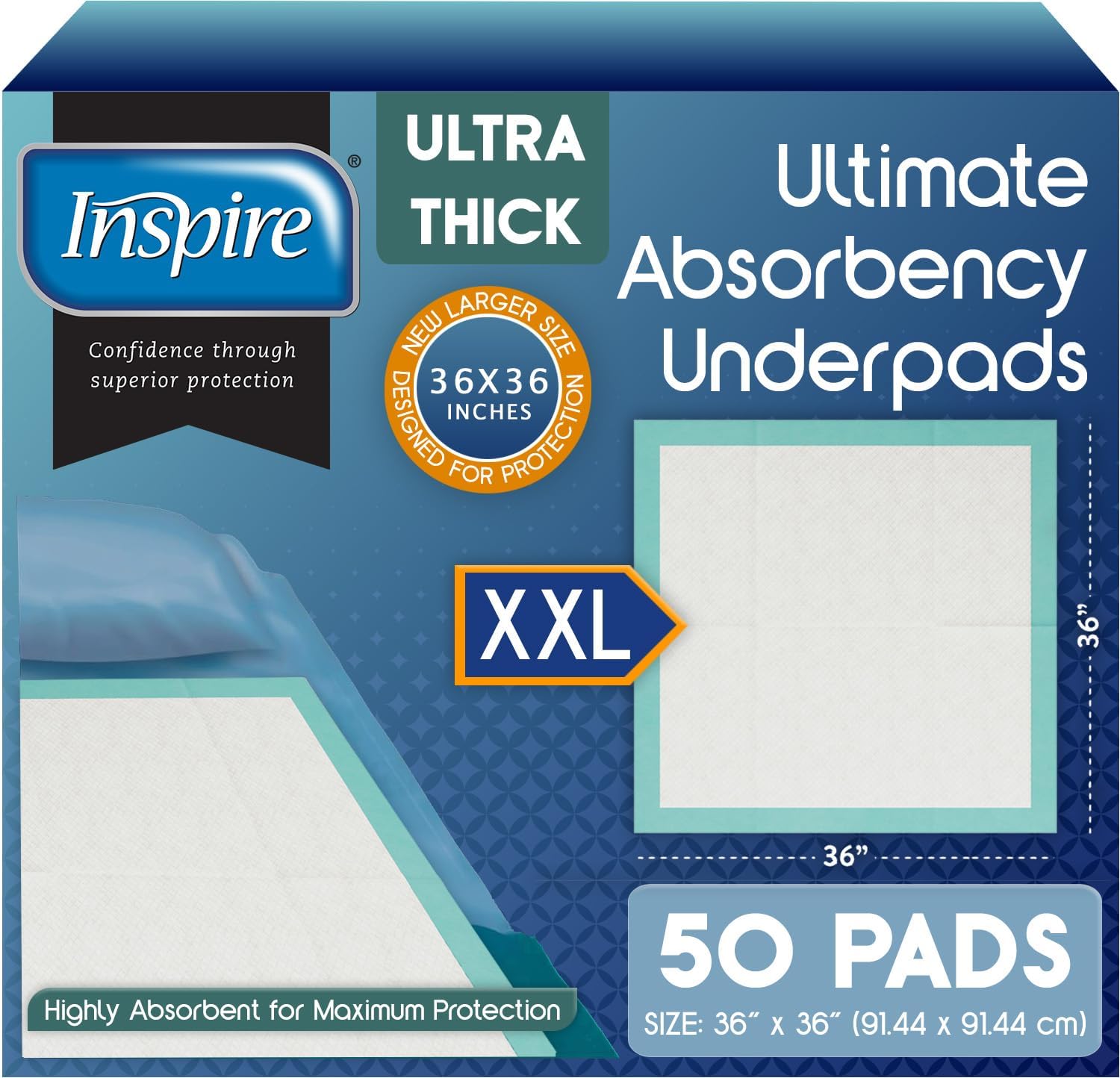
36 x 36 in, maximum, 50 pads
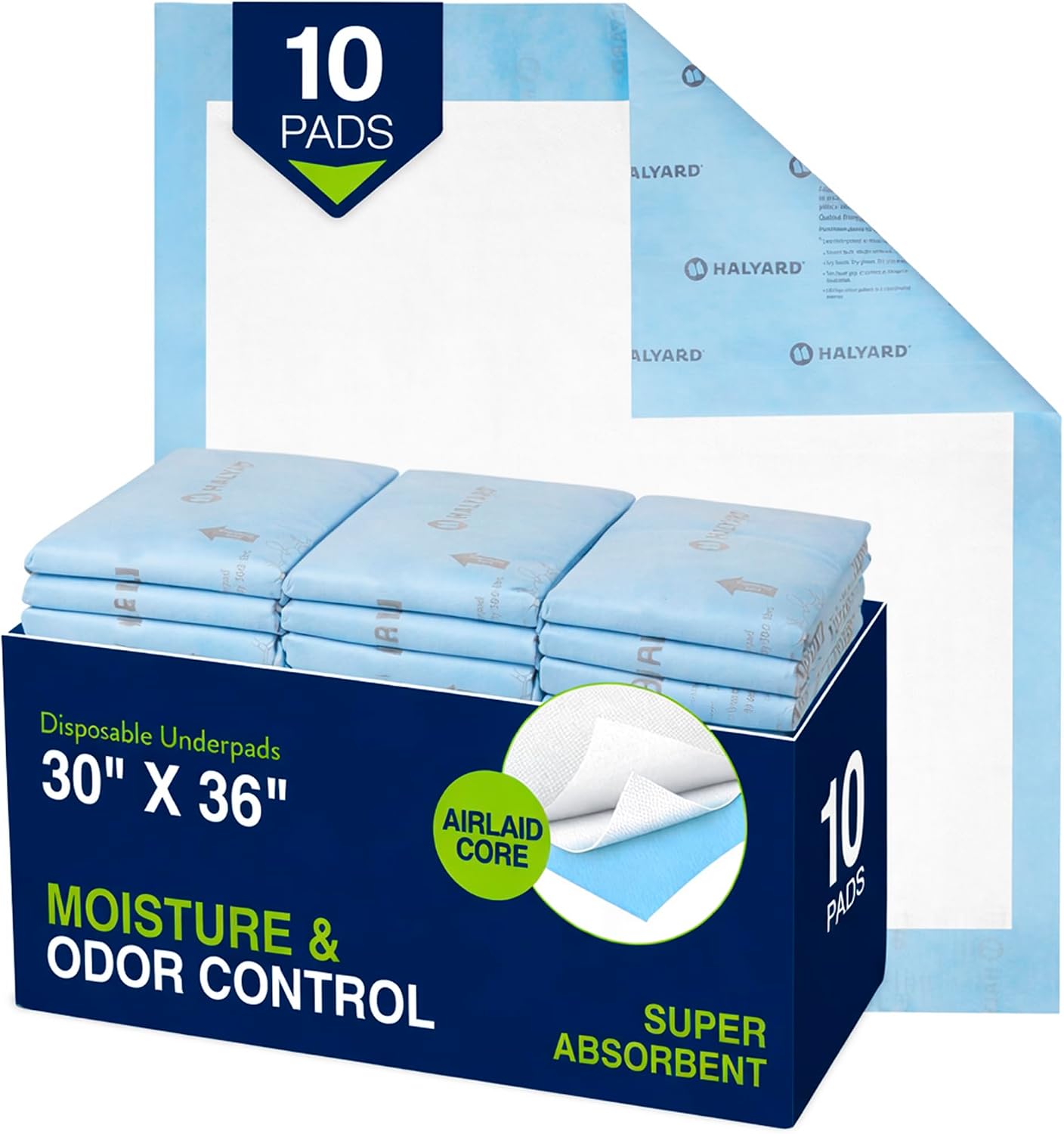
30 x 36 in, airlaid core, 10 pads
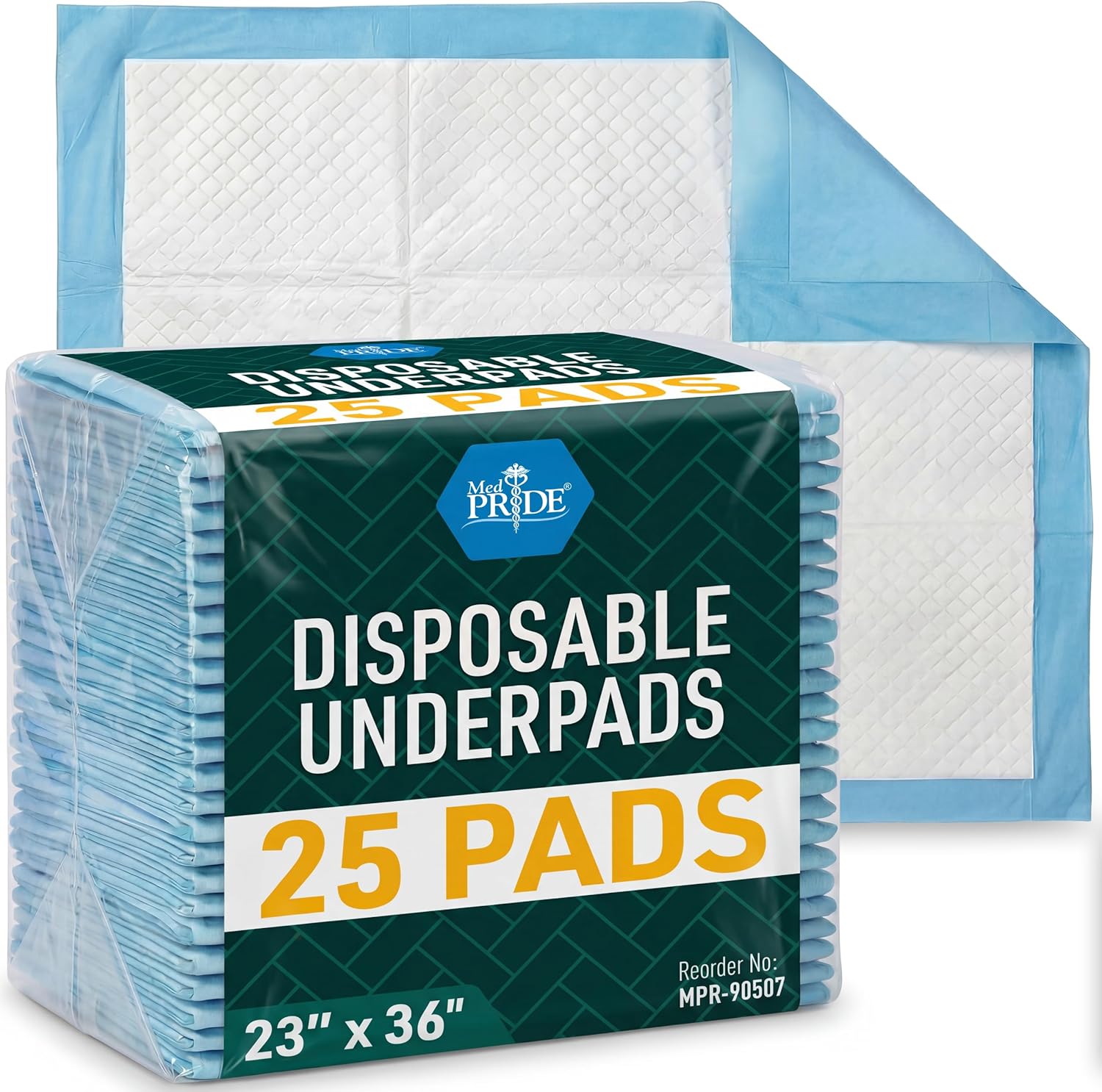
23 x 36 in, fluff, 25 pads
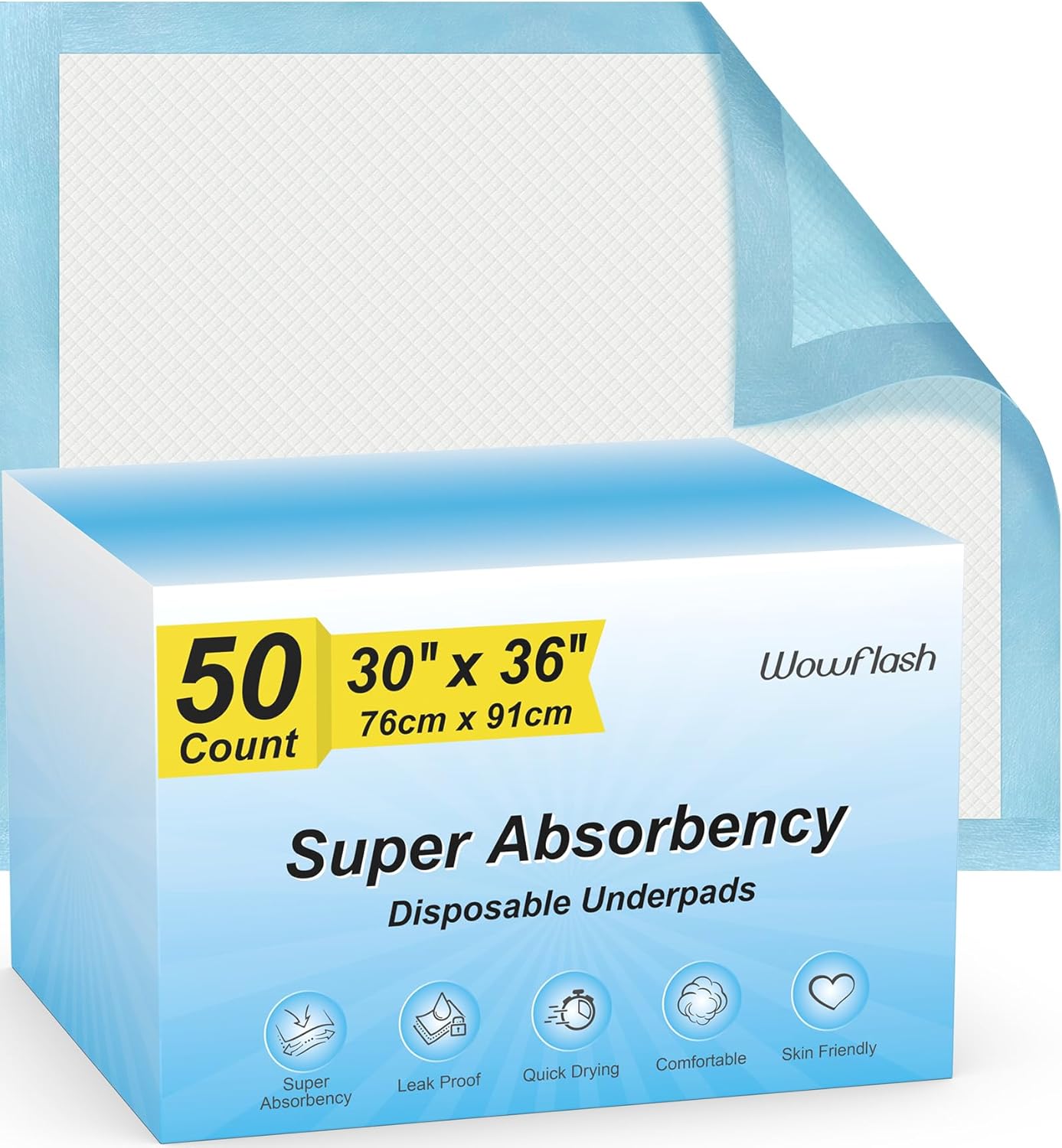
30 x 36 in, super, 50 pads
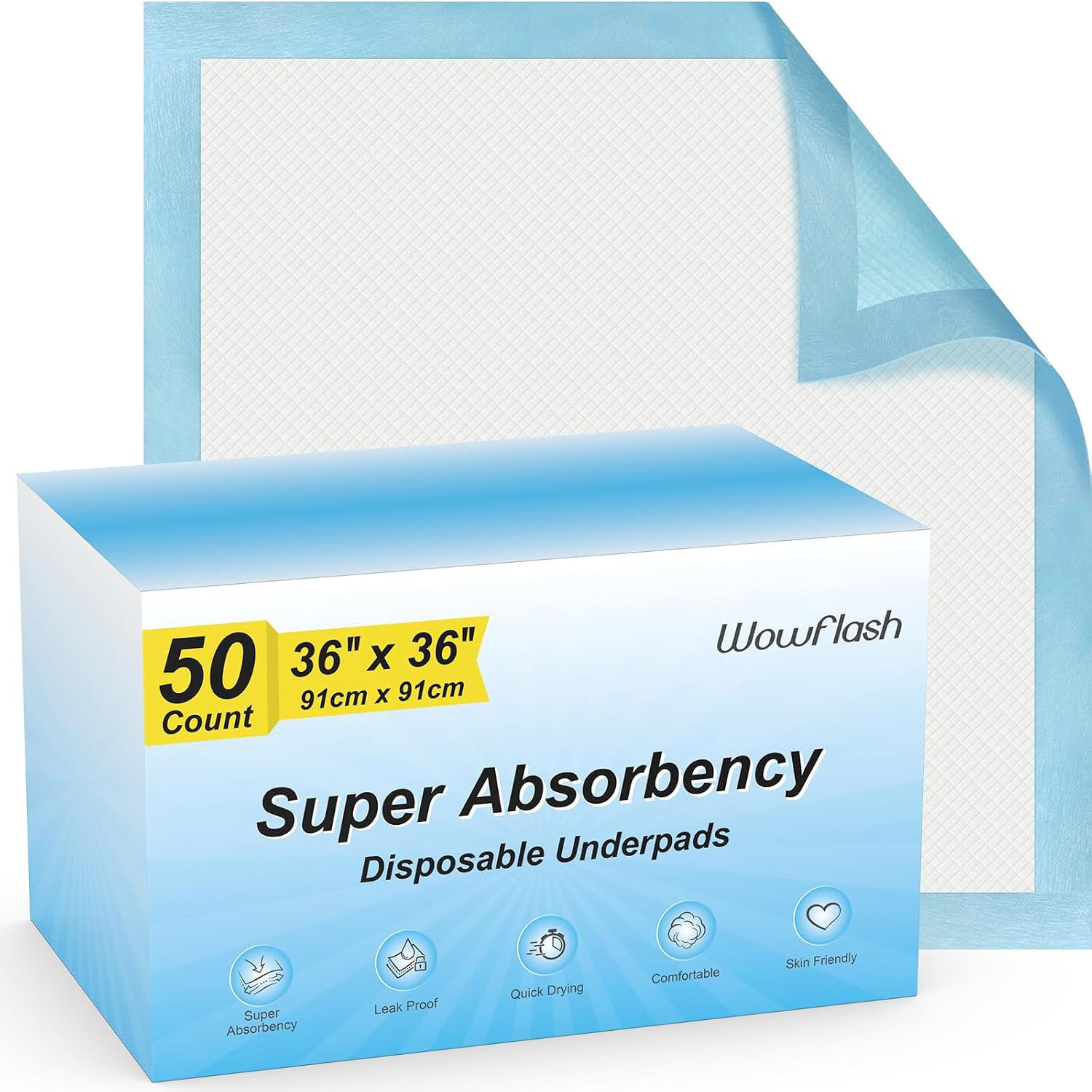
36 x 36 in, super, 50 pads
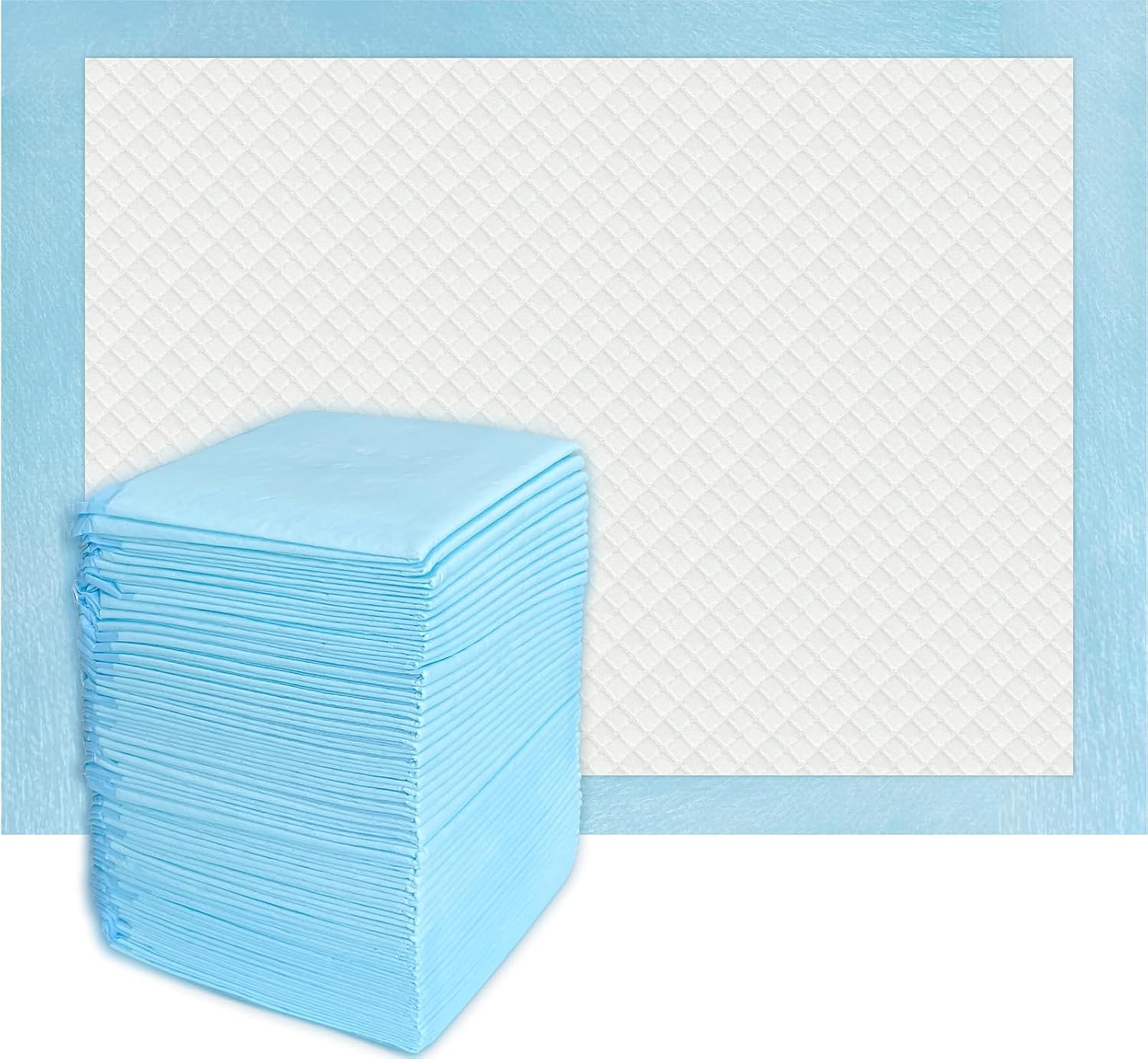
Compact chair pad, 50 pads
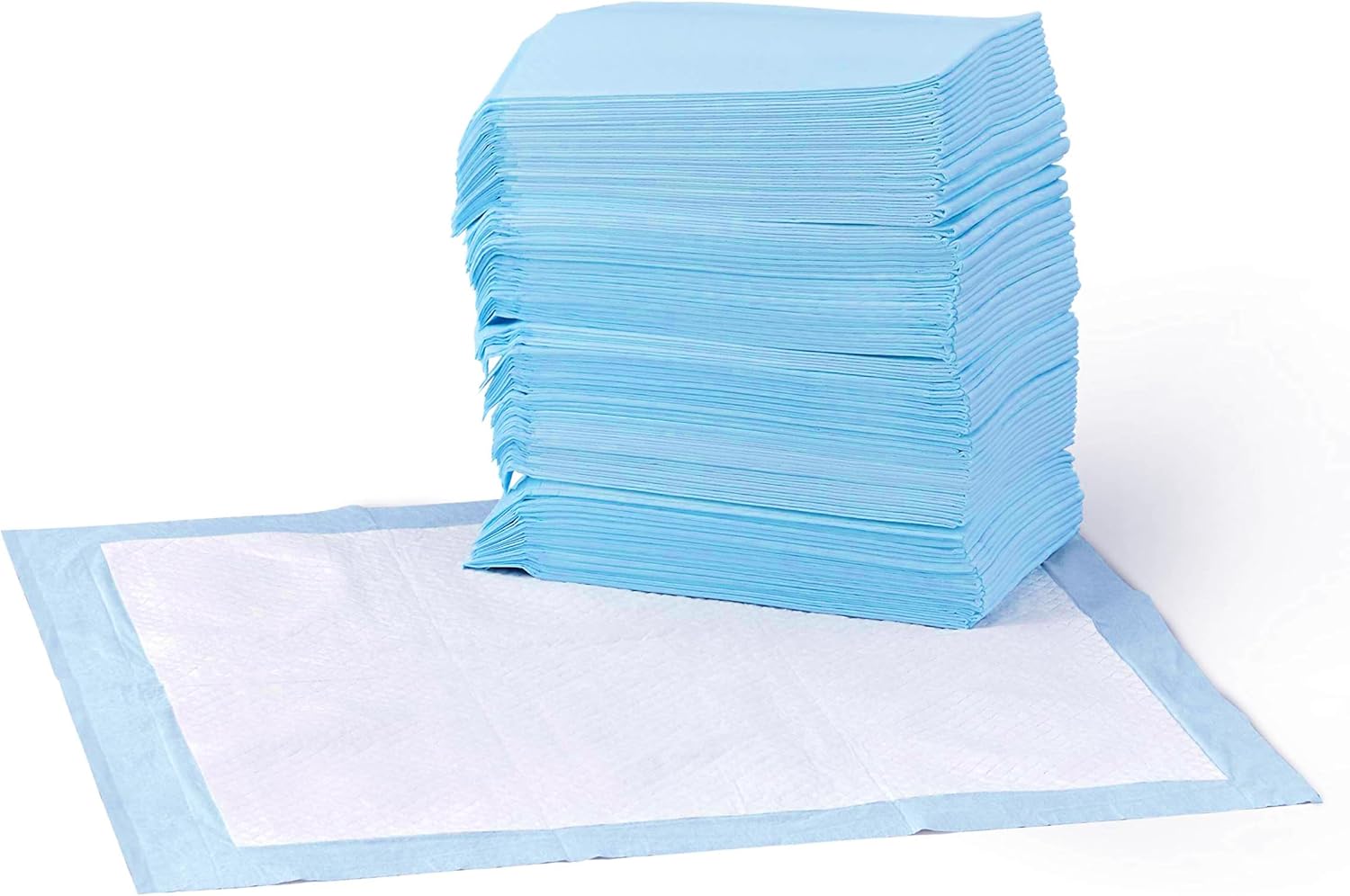
22 x 22 in, pet pads, 50 pads
Pack quantity moves the cost per pad more than anything else on this page, and a case is the cheapest way to buy the size you have already proved works. It is also the most expensive way to buy the wrong one, so settle the size on a small pack first.
Start With the Leak, Not the Price
Light protection
A light pad handles drips, small spills and backup duty under a brief that is already catching most of the liquid. Change it quickly and it costs almost nothing per use.
- 17 x 24 in covers a dining chair or a changing area
- Fluff cores at roughly 22 grams, no polymer
- Sold 100 to 300 per case, so the cost per pad drops
- Not enough core for an unattended night in bed
Moderate, everyday
Routine adult incontinence, a wheelchair seat, a recliner, a child in the middle of night training. The core holds a normal release and the pad gets changed the same day.
- 23 x 36 in is the size most homes settle on
- Fluff blended with superabsorbent polymer
- Enough coverage for the hips of a still sleeper
- Adhesive strips are worth paying for on a bed
Heavy and overnight
A full bladder release, eight hours between checks, or a mattress that would be painful to replace. Both numbers have to go up here: how much the core holds and how far the pad reaches.
- 30 x 36 or 36 x 36 in for a sleeper who rolls
- Polymer-heavy cores lock liquid inside the pad
- Breathable backing if the mattress is low-air-loss
- A printed weight rating if anyone will be repositioned
Two numbers have to be right at once. Absorbency stops the core from being overwhelmed. Coverage stops the liquid from running off an edge. Getting one right and the other wrong still ends with a wet mattress.
What Chux Pads Are and How They Work
What a chux pad is
An absorbent pad that goes underneath a person, a child or a pet to catch liquid before it reaches the surface below. Chux pads, chucks pads, disposable underpads, bed pads and blue pads all name the same product. The nickname stuck in American hospitals decades ago, from the fact that the pad gets chucked out once it is used.
The core decides capacity, not the thickness
A thin pad holding superabsorbent polymer can take more liquid than a visibly thicker pad made only from fluff pulp. Polymer traps moisture inside the core as a gel and holds it there under body weight. Fluff spreads liquid through the fiber and gives some of it back when someone lies on the wet area. Read the core, not the loft.
Hospital-quality is not a specification
Hospitals buy thin procedure pads, cheap fluff pads, polymer drypads, breathable low-air-loss pads and reinforced repositioning pads. All of them are used in hospitals and none of them share a spec sheet. The phrase tells you nothing on its own. Size, core material, backing type and any printed weight rating tell you everything.
The backing is a functional choice
Standard plastic film blocks liquid completely and suits an ordinary mattress, a couch, a chair or a floor. An air-permeable backing still holds liquid back but lets vapor and airflow pass, which is what a low-air-loss mattress needs to keep working. Putting a solid plastic pad on one of those support surfaces cancels the therapy it provides.
Chux Pad Sizes Side by Side
| Size | Coverage | Common applications |
|---|---|---|
| 17 x 24 in | Compact | Chairs, small changing areas, light backup under a brief |
| 23 x 24 in | Small to medium | Wheelchair seats, recliners, one targeted spot on a bed |
| 23 x 36 in | Medium | Adult incontinence, general home care, a still sleeper |
| 30 x 30 in | Medium to large | Wider chairs, broader bed coverage |
| 30 x 36 in | Large | Overnight adult protection, heavier leakage |
| 36 x 36 in | Extra large | A sleeper who moves, unpredictable leak location |
| 36 x 57 in | Extended | Broad bed coverage and specialized care |
| 40 x 80 in | Full-length | Treatment areas and close to full-bed coverage |
- The pad has to reach past the wet zone. A core with enormous capacity fails anyway when the liquid runs off an edge that was two inches too close to the hip.
- Bigger is not free. Oversized pads cost more per change, produce more waste, and bunch under a seated person when only a chair pad was needed.
- Absorbency labels are not standardized between manufacturers. One brand of heavy can carry a different core weight, polymer content and absorbent area than another brand of heavy.
- Measure the seat, not the furniture. A recliner three feet wide still only needs a pad across the part someone sits on.
Beds, Chairs, Kids and Pets
Beds and overnight
The job most pads are bought for
- Place it
- Under the hips, not the whole body
- Size
- 23 x 36 still, 30 x 36 or 36 x 36 if they roll
- Above or below the sheet
- Above, if you want fewer sheets to wash
- Second layer
- A waterproof mattress protector underneath
Sheets and pad both come off in one motion when the pad sits on top of the fitted sheet, which at 3am is worth more than a slightly tidier bed. The mattress protector stays underneath as insurance for the night the pad slides. Neither product replaces the other, and using both is the normal setup for recurring leakage.
Chairs, recliners and wheelchairs
Less area, more attention to the edges
- Place it
- Across the usable seat surface
- Size
- 17 x 24 to 23 x 36 in
- Watch for
- Wheels, footrests, reclining mechanisms
- Change it
- Once it folds into a ridge or turns damp
Seat protection asks for a smaller pad than most people reach for. Excess material that hangs over the sides finds its way into wheels and folding hardware, and a pad creased into a hard ridge under someone stops being comfortable long before it stops absorbing. Trim the size to the seat and the pad stays flat where it counts.
Kids, changing and pets
Fast cleanup, small footprint
- Night training
- Between two layers of sheets
- Baby changing
- 17 x 24 in on the changing surface
- Pets
- 22 x 22 in for crates, floors, car seats
- Feature that matters
- Adhesive strips, on any moving surface
Layer sheet, pad, sheet, pad on a child who wets at night. When it happens, strip the top two layers and a made bed is already underneath. For a puppy, an older dog or a cat with a tipping water dish, the same pad works on a floor, and buyers who use them that way keep mentioning the same catch: a wet pad on a smooth floor slides if you step on it.
- A body-worn product and an underpad are doing two different jobs. The brief travels with the person. The pad protects the bed they come back to, and catches whatever the brief leaks, shifts away from, or cannot hold.
- Stacking two weak pads is worse than using one right pad. Layered pads slide against each other, wrinkle under body weight, and hide which layer is actually wet.
- Work out the quantity from changes, not from box size. Two changes a day is about 60 pads a month, four is about 120, six is about 180. Full-time care runs far higher because most personal-care tasks start with a fresh pad.
- Try a small pack before a case. A case of the wrong size is dozens of pads nobody in the house will use.
What Buyers Photographed
I’m really happy with these training pads. I have a puppy that I’m currently potty training, and so far, these have worked really well. They absorb urine quickly and don’t let it soak through to the floor, which is a big plus for me. They’re good quality and definitely worth the purchase
Helen Ortega
These pads are a life saver for night potty training kids. I put them between layers of sheets so if there’s an accident I can simply pull off the top sheet and pads and have a fresh set ready underneath. They are large enough that 2 across covers a double bed. The sticky strips are SO helpful for keeping them in place and preventing leaks, especially if you have a kid that moves around a lot. The thickness and absorbency is top notch, haven’t experienced a single leak yet. They are not cheap but I find them to be well worth the money.
KG
I bought these because I recently got a kitten. I use these to line the floor if his room so that food, water and litter will get on the pads rather than the floor. They're great! They're nice and thick, the size is perfect for covering the room while only using a pit 4 or 5 pads at a time. They are easy to clean, I can shake the litter off and reuse them. They are durable, being a kitten, he's all over the place, playing and pawing on them. The sticky tabs on the back keep them in place so they're not moving across the floor or folding up as he plays. He's spilled his water dish on them and the water absorbed quickly and the pad was still in tact and strong. They're soft as well. These pads can be used over and over! I even use them for under my other cars littler box and food/water dishes. They're great for what I need them for and I will definitely buy them again!
C Green
The size of the pad is perfect for a twin bed and stays in place with the adhesive strips it has. The quality of the material is also really good because it is absorbent and durable.
Angela Trevino
These are very good for the price! I’ve paid more for some little nicer, but honestly, these work almost as good! And the adhesive tabs are a real plus! They are not as thick as some, but unless these are for a very active toddler, they’ll work fine. I will buy again.
Llinda G.
I use these as puppy pads for my dogs. They are the best product for the best price. I have large dogs and they absorb ridiculous amounts of urine, exactly as I need. If you use them for pups, they WILL slide on the floor if they are wet and you step on them, but they work much better than most puppy pads. I buy various sizes and put them on silicone mats.
Brittany
Using a Disposable Chux Pad
- 1
Soft side up, plastic side down
The absorbent cloth-like surface faces the person. The colored moisture barrier faces the mattress, chair or floor. Most pads pair a white top with a blue, green or peach backing, which is where the nickname blue pads came from, but color is not a rule. Go by which side feels like fabric, and by the package instructions.
- 2
Unfold it fully and put it where the leak lands
On a bed that means under the hips and lower torso rather than under the whole body. Open the pad out completely before it goes down. Half the coverage people think they have is still folded into the middle of the pad.
- 3
Smooth it flat before anyone lies on it
Creases send liquid sideways along the fold instead of down into the core, and a ridge under a hip becomes a pressure point within an hour. Run a hand across the pad and press out the major folds. If it has adhesive strips, peel them and press the pad to the sheet now.
- 4
Check it, and change it before it is full
Maximum capacity is a laboratory number, not a target. A pad can hold more liquid and still be too wet against skin, or too loaded to take a second release safely. Replace it once it is wet, soiled, torn, or pushed away from the area it was covering.
- 5
Clean and dry the skin first
A fresh pad under unwashed skin solves half the problem. Anyone prone to irritation needs the skin attended to promptly after an episode, because a waterproof backing can keep a mattress perfectly dry while conditions on top of the pad have already stopped being acceptable.
- 6
Roll it inward and throw it away
Fold the used pad in on itself so the wet surface ends up inside, then put it in the household trash, or follow facility procedure. Do not flush a disposable underpad. The polymer core swells in water and the backing does not break down.
Never use an ordinary chux pad to lift, turn, boost or transfer anyone. Standard pads are built to absorb liquid, not to carry body weight, and the backing tears under that kind of pull. Repositioning pads exist, they are reinforced, and they print a weight capacity such as 300 or 400 lb on the pack.
Check the mattress before the pad. A low-air-loss or alternating-pressure surface needs an underpad specifically identified as breathable or air-permeable. A solid plastic backing works against the system.
Most chux pads are non-sterile. A clean pad under a procedure area is a barrier for the bedding, not a sterile field and not a wound dressing.
About Chux Pads
ChuxPads.org is a specialty store built around one product category instead of treating it as a shelf inside a general medical supplier. The range covers compact chair pads, standard disposable chux, high-absorbency bed pads, extra-large underpads, breathable products for specialty mattresses and reinforced pads rated for repositioning.
The reason for narrowing that far is that underpads are unusually easy to buy wrong. Two pads with identical outside dimensions can perform nothing alike, because one holds a fluff core and the other holds superabsorbent polymer. A shopper comparing pack photos has no way to see that. Sorting the range by size, core material, backing type, absorbency and pack quantity puts the differences back in front of the decision.
The vocabulary causes its own trouble. Chux pads, chucks pads, chuck pads, hospital chuck pads, bed pads, blue pads and disposable underpads all point at the same category, and people arrive searching for every one of them. The name printed on the package rarely predicts what is inside it, so the specifications do the work here and the brand name does not.
Buying well takes three answers. How much liquid has to be absorbed, how far the pad has to reach around the expected wet spot, and how long it may sit in place before anyone checks. Settle those and the size and absorbency follow. After that the only remaining question is cost per pad, which is where pack quantity finally starts to matter.
Frequently Asked Questions
A specialty store for chux pads, disposable underpads, washable bed pads and related surface protection. The range is organized around the differences that change how a pad performs: size, absorbency, backing type, core construction, the surface it is meant for, and whether it is built for specialized care.
Chux pads absorb urine and other liquids before they reach a mattress, chair, wheelchair, couch, floor or changing surface. Common uses include adult incontinence, bedwetting, home care, medical procedures, postpartum recovery, pet accidents and general leak protection.
Usually, yes. Chux pads, chucks pads, disposable underpads, bed pads and blue pads name the same general type of absorbent surface protector. Individual products still differ a great deal in absorbency, dimensions, materials and intended use, so the specifications matter more than the name on the box.
Pick a pad that extends past the area where leakage is likely. A 17 x 24 inch pad works for chairs and small changing areas. 23 x 36 inches is the common general-purpose size. 30 x 36 or 36 x 36 inch pads give more coverage for beds and for anyone who moves during sleep. Full-length underpads exist when a much wider section of the mattress needs protecting.
The difference is how much liquid the core can take in and hold. Light pads suit small leaks and backup protection. Moderate pads handle routine incontinence and everyday bed or chair protection. Heavy and maximum pads are built for larger releases, overnight use, and situations where frequent changes are difficult. These words are not standardized between manufacturers. Core material and stated capacity compare better than a label such as heavy duty.
No. A thick fluff-only underpad can hold less liquid than a thinner pad containing superabsorbent polymer. Polymer captures and retains a large volume inside the core, which lets some high-capacity pads stay relatively thin. Compare absorbency specifications and core construction rather than judging by how thick a pad feels.
The soft absorbent surface faces up toward the person or the source of the liquid. The waterproof or moisture-resistant backing goes against the mattress, chair, floor or other surface being protected. Many traditional pads have a white top and a blue backing, but colors vary. Texture and the package instructions are a more reliable guide than color.
Yes. Overnight use needs enough absorbency for the expected volume and enough width to allow for movement during sleep. A high-capacity 30 x 36 or 36 x 36 inch pad often protects better than a smaller economy pad. A waterproof mattress protector can stay underneath the bedding as backup in case the disposable pad shifts or the leak reaches an uncovered area.
Yes. A body-worn product and an underpad do different jobs. The brief or pull-on contains leakage close to the body. The chux pad protects the bed or chair if that product leaks, shifts or becomes saturated. Using both is common for overnight care and for moderate to heavy incontinence.
Replace it once it becomes wet, soiled, torn or displaced from the area it is supposed to protect. A pad does not need to reach maximum capacity before it should be changed. This matters most when someone stays in bed or seated for long periods. A waterproof backing can keep the furniture dry well after the top surface has stopped being suitable for prolonged skin contact.
Neither type wins outright. Washable underpads can be economical for predictable daily use and cut down the number of single-use products consumed. Their heavier fabric also helps them lie flat on a bed. Disposable pads remove the laundry and make cleanup easier after a heavily soiled accident, illness, travel or medical care. High-polymer disposables also deliver considerable absorbency without the bulk of a thick reusable pad.
Yes. They protect floors, crates, bedding, furniture and vehicle seats from urine and other liquids, which makes them useful for senior pets, incontinent animals, recovery after veterinary treatment and travel. Dedicated puppy training pads add features aimed at house training, but a standard chux pad does the same basic job of absorbing liquid and protecting what is underneath.
No. A conventional plastic-backed underpad can restrict the airflow a low-air-loss mattress is designed to provide. Use a pad specifically identified as breathable, air-permeable or compatible with the mattress system. The same rule applies to other specialized support surfaces. Confirm compatibility from the specifications of both products rather than assuming it from how the pad looks.
Only if that specific underpad is designed and rated for repositioning. Ordinary disposable chux pads are absorbent surface protectors and can tear when pulled under body weight. Repositioning underpads use reinforced construction and state an explicit weight capacity. A product that does not say it is intended for repositioning should never be treated as a lifting or transfer aid.
Underpads and closely related leak protection, rather than one small category inside a general medical or household store. The selection can include compact chair pads, standard disposable chux, high-absorbency bed pads, extra-large underpads, washable options, breathable products and reinforced pads for specialized care. The aim is to make products comparable by the specifications that determine how they actually perform: dimensions, absorbency, core materials, backing construction, intended application and pack quantity.
Get the Size Right First
How much liquid, how far it can travel, and how long the pad sits before anyone checks. Those three answers pick the pad. A 23 x 36 covers a still sleeper. Anyone who rolls wants 30 x 36 or wider, and a low-air-loss mattress wants a breathable backing.
Shop Chux Pads